
Opinion: Why I Back Restore Britain
By Dan Haley | @cymroofbarri89
As I write this, Rupert Lowe’s Restore Britain has surpassed 113,000 members in just 31 days, eclipsing the dwindling Conservative membership to officially become the fourth largest political party in the country, behind Reform, Labour and the Greens. It has already witnessed councillor defections, primarily from Reform, particularly in the Kent County Council branch, where seven councillors switched sides.
Connor Haul, former chairman of Reform UK’s Great Yarmouth branch, has also recently announced his defection to Restore Britain, along with other councillors from across England, including Warwickshire, Leicestershire, Hertfordshire, Northamptonshire, the Borough of Swale, and Redcar and Cleveland. Other Reform branches are also switching sides. Another notable defection came in the form of Richard J. Shaw, co-founder of the party that became Advance UK.
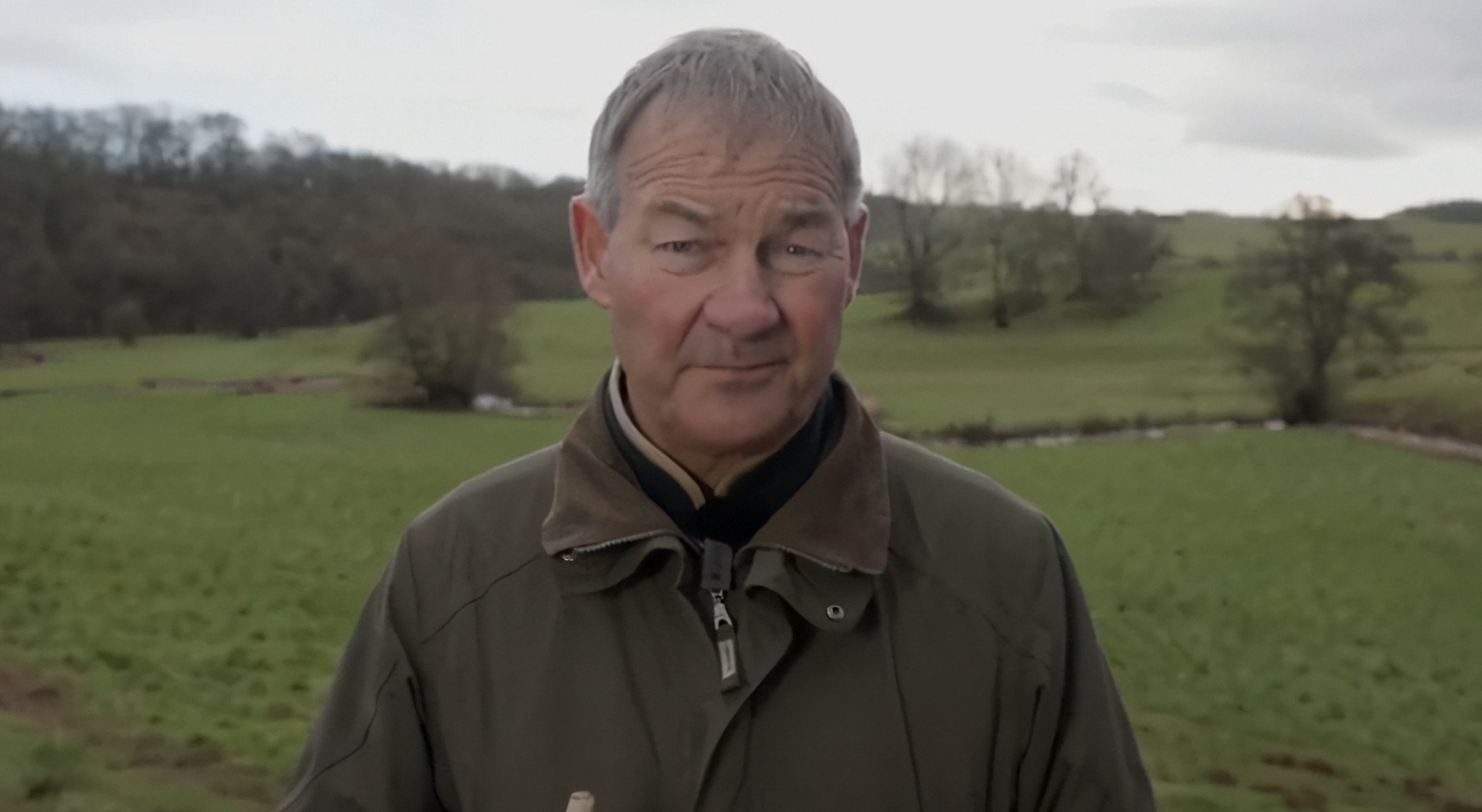
In the first opinion poll, just 24 hours after launch, the party gained 10 per cent, ahead of the Liberal Democrats. It later polled an impressive 7 per cent nationally and ranked fourth in voting intention in Wales. Rupert Lowe’s online and public presence has grown rapidly since he announced the party in his home constituency of Great Yarmouth on 13 February. His launch video, filmed on his own farm, has been viewed more than 41.6 million times on X alone.
This momentum has been remarkable to witness in real time. I personally became a member on the day of the announcement. But why have I, a committed nationalist, hitched my cart to the Restore wagon, a party not explicitly nationalist? The answer is simple: necessity.
A Very Brief Summary: My Political Journey
My political trajectory has been a strange one since the 2010 general election, the first in which I voted. To my shame, I voted for Nick Clegg’s Liberal Democrats. I assure you, it is only uphill from here. You have to understand that 2010 was a very different time, both for me and for the country. Britain had endured 13 long years under Blair’s New Labour.
I have never been, and am still not, a Labour or Conservative voter, even tactically. This already marked my early departure from the traditional uniparty. At the time, the Liberal Democrats seemed the least worst option, and I was comfortable identifying as a classical liberal for several years afterwards.
That changed quickly. The murder of Lee Rigby in 2013, the Manchester Arena bombing, the Westminster terror attack, and growing reports of grooming gangs in England over a short span of years began to challenge my beliefs and expose flaws in my liberal outlook. “Don’t Look Back in Anger”, right? But I was angry.
At the same time, anti-immigration sentiment was rising under Nigel Farage’s UKIP, which became a significant political force in the European Parliament in 2014 and secured 12.6 per cent of the vote in the 2015 general election. I became one of those disillusioned voters, admittedly casting a protest vote.
Five years is a long time in politics. Farage was the firebrand, the no-nonsense figurehead for many in the so-called “People’s Army”. I backed Leave in the EU referendum in the hope of reducing immigration and regaining control of our borders. That hope, in my view, turned into yet another betrayal, as did the appointment of Boris Johnson in 2019 and the subsequent surge in immigration.
Several intellectual influences also shaped my thinking. Jonathan Bowden’s Why I Am Not a Liberal, Andrew Anthony’s The Fallout: How a Guilty Liberal Lost His Innocence, and Douglas Murray’s The Strange Death of Europe all marked turning points. They led me to question multiculturalism, liberalism, and what I saw as a growing sense of Western self-doubt. The resurgence of the radical left in the 2010s, combined with what I perceived as the Conservatives abandoning their core principles, pushed me further to the right.
I became involved in identitarian circles and the so-called “alt-right” scene, following figures such as Carl Benjamin, Lauren Southern, Stefan Molyneux, Martin Sellner, Milo Yiannopoulos, and Tommy Robinson. I attended a small number of marches but ultimately found them ineffective.
By the 2019 general election, I felt politically homeless and spoiled my ballot. The COVID-19 lockdowns, associated restrictions, and their broader social and economic impact further distanced me from politics. For a time, I considered disengaging altogether. However, by 2024, Farage had returned with Reform UK, presenting himself once again as a figure capable of addressing a divided and troubled Britain.
Lowe and Behold
Farage regained my vote, and nearly my loyalty as a member, until the controversy surrounding Rupert Lowe led me to leave both him and the party. I had always been more drawn to Lowe, one of Reform’s five MPs. He appeared the most direct, articulate and unapologetic, willing to challenge political correctness on issues such as immigration, crime, Islam, and the legacy of Blair-era legislation.
Lowe, educated at Oxford and from the so-called baby boomer generation, built a successful career in business and finance, including work in the City of London. At first glance, he might not seem an obvious candidate to lead a broad political movement. However, since becoming an MP in 2024, he has steadily gained public attention through his blunt and direct communication style.
As someone who values actions over words, I have noted that Lowe has followed through on several of his commitments. He pledged to hold a private inquiry into grooming gangs and produced a detailed report on mass deportations to address illegal migration. He has also been vocal in criticising what he sees as an overextended civil service.
He presents himself as principled and consistent, qualities that are rare in British politics. He is also a family man with four children and, as far as public knowledge suggests, free from major personal controversies. His popularity continues to grow, both online and offline.
That said, no political movement can rely solely on one individual. If Restore Britain is to succeed as a serious political force with grassroots support, it must develop a clear identity beyond its leader. Reform made the mistake of being overly centred on one figure, and Restore must avoid doing the same. While its direction is becoming clearer, it is still in its early stages.
A Party Just for Us at Last
It has become increasingly evident to me that Reform UK represents a continuation of the existing political consensus in a different form. There remains, in my view, a lack of genuine representation for native British people within the current political system. Restore Britain appears intent on filling that gap.
Its branding, messaging and presentation suggest an attempt to engage directly with public concerns, supported by a younger and active membership. The campaigns director and spokesman, Charlie Downes, has been particularly visible. While still relatively new to the spotlight, he appears to be adapting to the scrutiny that comes with political exposure.
Restore also distinguishes itself by addressing issues it believes other parties avoid, including demographic change and national identity. It emphasises the idea that Britain is more than an economic unit or a legal status, but a nation with a shared identity and history.
On immigration, the party goes beyond focusing solely on illegal entry and seeks to address legal migration as well, describing current levels as unsustainable. It proposes reducing overall migration to negative levels, alongside measures such as leaving the European Convention on Human Rights, reforming human rights legislation, ending indefinite leave to remain, and closing asylum hotels.
Other proposals include stricter deportation policies and cultural measures such as banning certain forms of religious dress and reforming animal slaughter practices. These positions reflect a broader attempt to shift the political conversation.
Restoring Faith in British Politics
“If you believe in low tax, small government, secure borders, national pride, traditional Christian principles, free speech, and direct democracy, you are in the right place.”
While I agree with many of these principles, particularly on borders and national identity, I believe a stronger state is sometimes necessary to balance market forces and protect national interests. While Lowe has criticised the state as overreaching, that does not necessarily mean it should be weakened to the point of vulnerability.
To me, Restore Britain represents a form of middle ground. It is neither an extreme libertarian project nor an authoritarian one, but an attempt to build a state that prioritises national cohesion, security and accountability.
It is still too early to determine what the party will ultimately become. As it grows, it will face internal pressures and ideological differences. For now, however, it is gaining traction rapidly and establishing itself within a relatively stagnant political landscape.
I belong to the millennial generation. I grew up in the 1990s and early 2000s and remember a strong sense of community and local identity. High streets were places of pride, and neighbourhoods felt safe. That sense, in my view, has diminished over time.
Restore appears to recognise this shift. It speaks to a desire to reclaim aspects of national and community life that many feel have been lost. My own experiences, including visiting areas significantly changed in recent years, have reinforced that perception.
Restore Britain has, at present, both momentum and credibility. It is relatively new and not yet burdened by the reputational issues that affect more established parties. While I have some reservations, particularly regarding its Thatcherite economic leanings, these are outweighed by what I see as its broader direction.
Ultimately, I support Restore Britain because I believe it offers the strongest opportunity to deliver meaningful change. It represents, in my view, not just reform, but a more fundamental restoration of the country’s political and cultural foundations.