
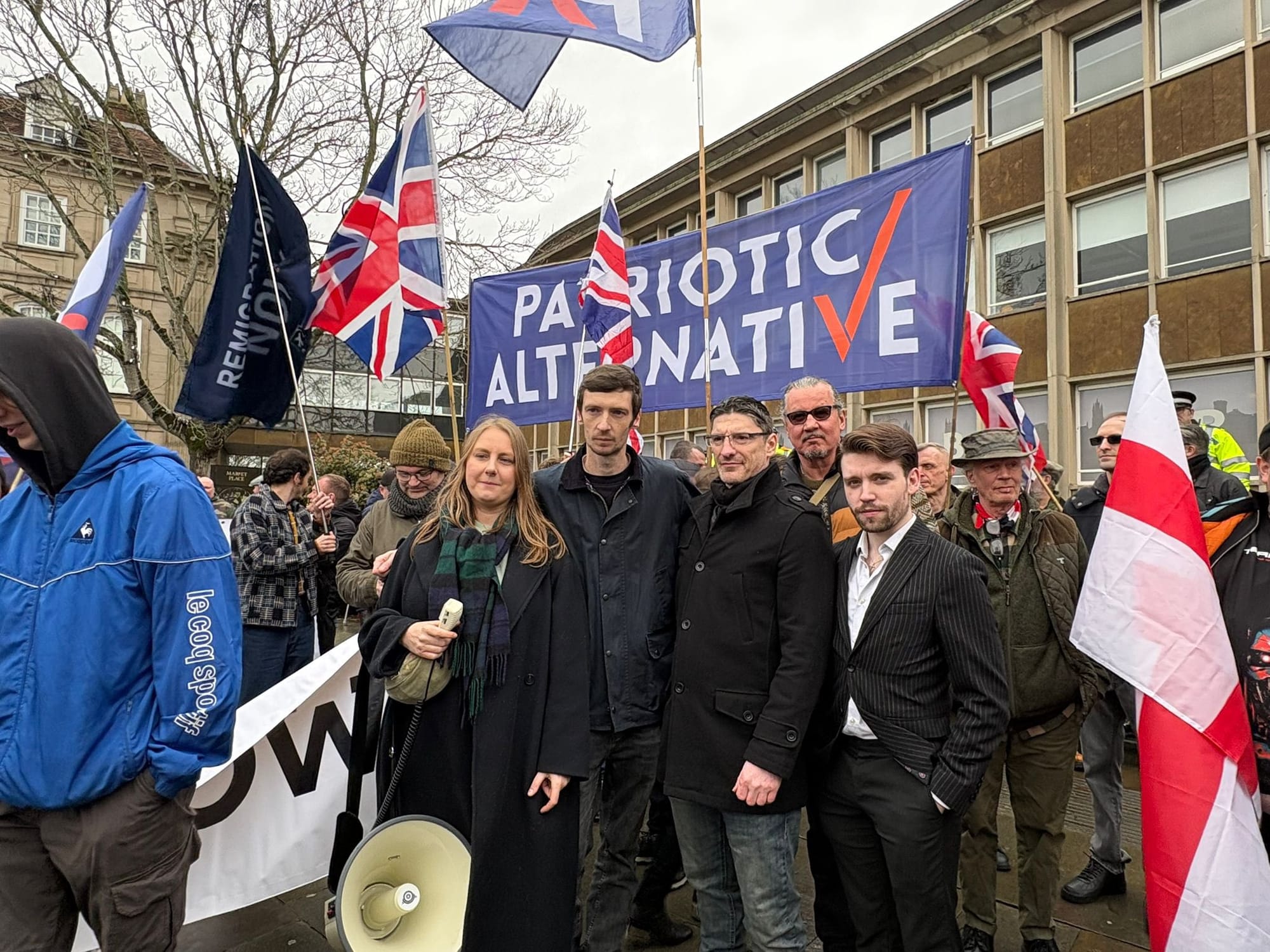
Patriots Demand Remigration in Warwick
A demonstration organised by the nationalist groups Remigration Now and Patriotic Alternative proceeded successfully in Warwick yesterday, despite what can only be described as serious police negligence in preventing disorder and ensuring public safety.
Protesters assembled in Warwick Market Square to call for Remigration and an immediate end to the use of asylum hotels across Britain. The demonstration was in a direct response to multiple recent sex crimes committed against local children, including two girls aged just 15 and 12.
Outpost's Dan Haley covered one of these stories here:
https://www.outpostmedia.uk/another-week-in-migrant-rape-britain-when-is-enough-enough/
Both victims were reportedly abused by Afghan nationals who were being housed at a local asylum hotel, an issue that has continued to plague towns and cities all over the country.
Steve Laws, founder of Remigration Now, said that representatives from six or seven different nationalist groups attended the protest in solidarity with the Remigration cause. He spoke optimistically about the growing co-operation between organisations that have historically operated separately.
“It was great to see multiple organisations all working together under the same banner, all campaigning on the same issues, all standing together united, this is the way we move forward,” he said.
Laws stressed that unity was not merely symbolic but practical, arguing that meaningful political change requires coordination rather than fragmentation.
“With all of our organisations working together, combining our manpower and resources, we can actively campaign on real change. There’s no point in all of us working in our own little bubbles: we all want the same thing.”
Reflecting on the atmosphere of the day, Laws added:
“Today’s turnout was amazing. It was great to see everyone here. Everyone seemed really energetic; the speeches were great.”
Mark Collett, leader of Patriotic Alternative, delivered a speech addressing the reality of demographic change in Britain. Speaking directly to the crowd, Collett framed the issue as one of consent and democratic legitimacy.
“The English, the Scots and the Welsh are being replaced, and did any of you vote for that?” he asked. “Did any of you want to be replaced? Do any of you want to be a minority?”
The questions were met with a resounding and unified “No!” from the assembled crowd.
Also addressing the protest were Patriotic Alternative co-leader Laura Towler and activist Ian Holloway. Nationalist social media personality Hugh Anthony was also in attendance, further underlining the breadth of online and offline support for the demonstration.
While the spirit of the day was centred on the peaceful exercise of legally guaranteed rights to protest, in full accordance with the law, this did not sit well with the usual extremist opposition.
Groups such as Stand Up to Racism, alongside some Green Party members operating under the banner of “Greens Against Fascism,” mobilised a counter-demonstration. Their presence appeared aimed less at peaceful disagreement and more at deliberate provocation and disruption.
Despite being aware of the risks posed by opposing groups, local police failed to adequately segregate demonstrators. This failure allowed hostile individuals to enter the pro-remigration crowd, resulting in confrontations that could have been avoided through basic crowd-management measures.
Protesters reported delayed police responses, leaving them exposed and forcing individuals to defend themselves and their comrades from agitators.
The police somehow where BEHIND the line of lefties that appeared to surround us. SLOW AF
— Jennifer ✝️ (@Jennifer_NRP) February 8, 2026
Beard man leftie started it.
This failure represents more than simple incompetence. It reflects a broader pattern in which lawful nationalist demonstrations are subjected to inadequate policing, while the rights and safety of protesters are treated as secondary considerations. By failing to intervene decisively, police not only allowed disorder to occur but undermined confidence in their ability to act impartially and uphold public order.
The Warwick demonstration underscores a growing reality in British politics: remigration and opposition to asylum hotels are no longer fringe concerns but issues capable of mobilising coordinated, multi-group action in response to local events.
The turnout, cooperation between organisations, and intensity of feeling reflect a movement that increasingly sees itself as responding to institutional failure rather than merely opposing policy.
It is vital that these groups sustain the momentum they gained on Saturday, now that they have shown they can come together as one force, all attendees must continue to focus on meaningful organisation, coordination, and action.
Historically, multi-group alliances are sustainable only when there is a clear goal. Attendees should focus efforts on a specific hotel or town and create an effective forum for activism, where all parties are able to act in accordance with their strengths. They should also strive to organise the concerned locals to defend their community as a priority.
Equally, the events of the day raise serious questions about policing, public order, and the unequal enforcement of protest rights. When peaceful demonstrators are left exposed to violence through negligence or inaction, responsibility lies not with those exercising their legal rights, but with the authorities charged with protecting them.
As similar protests and movements continue to emerge across the country, the Warwick demonstration should be seen not as an isolated incident, but as part of a wider confrontation between public anger and a system unwilling to adapt to the changing realities of dissent in modern Britain.