
Two-Child Cap Scrapped: A Double Edged Sword
by Dan Haley | @cymroofbarri89
A few days ago, the Labour government lifted the two-child benefit cap first brought in by the Conservatives in 2017. For nine years, Universal Credit (UC) and child support would only be offered to families for their first two children, in an attempt by Theresa May’s government to save the Treasury £3.6 billion per annum.
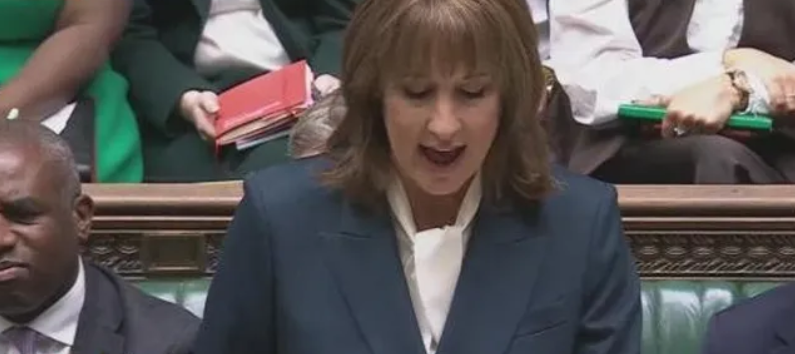
Chancellor Rachel Reeves had announced it would be scrapped back in November of last year when she delivered her budget address. Charities welcomed this move, such as Unicef UK, who described it as a “major, necessary decision” to tackle the issue of child poverty. Action For Children called it a “turning point for struggling families.”
Reeves, in a statement said that, “today we are lifting 450,000 children out of poverty with the end of the two-child limit. This Labour government is achieving the biggest reduction in child poverty over a Parliament since records began.” Amidst the growing and very real cost of living crisis, Prime Minister Keir Starmer welcomed this decision saying that his government was “on the side of the British people.” On recent foreign policy particularly in regards to Iran, that is certainly in no doubt. But what are the wider implications of this?
Many of course criticised the move, including Kemi Badenoch who took issue with the government putting those who are on benefits ahead of working people. She said, “While working people struggle with rising fuel costs and food prices, Keir Starmer is giving another handout to those on benefits. The Conservatives believe in fairness and that those on welfare should have to make the same choices about their family as those who aren’t. That’s why we would reinstate the two-child cap and use the savings to bolster our armed forces.”
Rupert Lowe, of the newly Electoral Commission-approved Restore Britain party, also came down hard on the government’s decision. On his X account, he said, “you are stealing tax from productive Britain and handing it to lazy foreigners and the healthy indolent. If anyone ran a company like you ran the economy, they’d be in prison.” Strong words, but like most issues, it is usually far more complicated than that.
Badenoch, Lowe and others view it in a very binary sense of either being a good thing or bad thing. The fact of the matter is that it is a GOOD decision, but NOT in its current iteration.
Speed Running Our Demographic Decline
We should of course incentivise British families to have more children. The two-child cap did put an unnecessary burden on families, discouraging them from starting larger families. Birth rates in Britain have been on the sloop for years as we know. British births fell 33% from 476,328 in 2012 to just 318,934 in 2024. According to all reliable forecasts, the native share of the population will continue to drop from 73% as per the current 2021 census to just 57% by 2050, perhaps sooner if current declining birth and immigration trends continue.
That puts us in very dangerous territory, bordering on becoming a nationwide minority, not just in a few cities, towns and boroughs. As recent as 2024, nearly half, 40.4% of births to be exact in Britain had at least one parent that was born outside of the country. Higher foreign-born rates are already staggeringly high in London and other cities.
To rub further salt on the wound, unfortunately in its current form, UC and child support can also be claimed by the millions of foreigners who have permanent settlement here in Britain. While this two-child cap lift may encourage and incentivise British families to have more children, it also allows those in the foreign population to simply have yet more children at ever faster rates, all at taxpayer expense.
In an ideal world, under an ideal, patriotic government, foreigners would have no right to claim any benefits at all, let alone be granted Indefinite Leave to Remain (ILR), therefore having full access to the welfare state.
The shocking statistics show that 1 in 6 UC claimants are born outside of Britain according to the Department for Work and Pensions. An estimated £10.1 billion in benefits were paid to non-UK nationals in 2024, a massive hike from £6.3 billion in 2022. Not only that, foreign nationals in the first quarter of 2025 accounted for 16.4% of all UC claimants, 1.3 million in all, not counting other benefits either. Again that figure should be zero. This is neither fair or sustainable in its current form.
The native people of these Isles, and ONLY the native people should have access to welfare. Full stop. The fact that we are essentially paying for our own gradual replacement is nothing short of political betrayal of the worst kind. It begs repeating that the British people have consistently voted AGAINST more immigration.
Brexit succeeded largely off the back of anti-immigration sentiment, this is undeniable. The average voter didn’t really care for the corrupt bureaucracy of Brussels, or the unelected bodies within it, not to mention the tangled reams of EU legislation and regulation. That had no tangible effect on their immediate circumstances or surroundings. They cared that they were “taking back control” of the borders, and bringing down immigration which they saw as too high already back in 2016.
So in essence, yes lifting the cap is a good thing, but it should be catered only to the native people, no one else.
“Rewarding The Healthy Indolent”
The other argument is that it encourages state dependency and the “healthy indolent” as Rupert Lowe puts it, and this does have some merit, though there are caveats here too. As I’ve already touched on, many foreigners are already in the benefit system, claiming social housing, and putting unnecessary strain on our public services, the NHS most of all. This two-child lift will merely accelerate the current climate around us being a soft touch and merely an economic zone for ILR foreigners to siphon further resources.
Many Brits are simply feeling the pinch of the current cost of living crisis, with many seemingly better off on benefits than working, even full-time jobs. That is a systemic problem that is not easily fixable or subject to a simple black-and-white diagnosis.
There are many complex factors involved including inflation, economic downturn, job opportunities, interest rates, business rates, taxation, the housing market, standard of living costs and many, many others.
The ideal state should provide its people with greater chances at prosperity while also having that safety net in place to cushion the landing for individuals and families that are genuinely struggling to get by. Socialist policies in a nativist, nationalist vein if you will.
I want the British people to feel like they have some measure of material comfort while also being able to raise families with the extra support they may need. You will get your native freeloaders and shirkers sure, but they are not representative of the total population. Lazy foreigners who just leech off the state should just be deported anyway. Very uncontroversial.
The Protestant work ethic does live on in us as it has done for hundreds of years, but it is largely down to a lack of opportunity more than a lack of genuine motivation or will to work these days. Our high levels of immigration are another factor, where not only are the demographics impacted, but jobs that could have otherwise gone to aspiring British workers are now being filled en masse.
The state in its current incarnation is actively working against its own people in many ways. The decision this week would be great, if only it was exclusive.